
Church Social Media Strategy: The Complete 2026 Guide to Growing Your Digital Ministry
Master church social media strategy with proven content pillars, platform selection, posting schedules, and engagement tactics. Learn how to reach the 95% who don't attend your church while strengthening your existing community.
Ready to Get Your Church Online?
Professional church websites built in 48 hours. No technical skills required. Starting at just $97.
It's Monday morning. You just wrapped up another powerful Sunday service where lives were changed and hearts were touched. The sermon resonated deeply with your congregation, and you know God moved in powerful ways. But now you're staring at your church's social media accounts, wondering what to post this week.
The ideas aren't flowing. The time isn't there. And honestly, the energy ran out somewhere between Sunday's second service and Monday's staff meeting. You know your church needs a consistent social media presence, but keeping up feels like running a marathon with no finish line in sight.
If this scenario sounds painfully familiar, you're not alone. Thousands of churches across the country wrestle with the same challenge every single week. According to recent research, 67% of churches struggle to maintain consistent social media posting, and 82% of church communicators report feeling overwhelmed by the demands of digital ministry.
Here's the truth that most church leaders don't talk about: your Sunday sermon carries life-changing truth, but if that message stops on Sunday, you're missing the digital mission field waiting online. In 2026, social media isn't just a nice-to-have marketing channel—it's a critical extension of your ministry that can reach people who may never walk through your physical doors.
This comprehensive guide will walk you through everything you need to build a church social media strategy that actually works in 2026. You'll discover proven content frameworks, practical posting schedules, platform selection strategies, and engagement tactics that help you reach both your existing congregation and the 95% of people in your community who don't attend your church.
Why Your Church Needs a Social Media Strategy
Let's address the elephant in the room: many churches approach social media with good intentions but no real strategy. They post when someone remembers, share announcements when events are coming up, and hope that somehow their content reaches the right people at the right time.
When churches post sporadically without a strategic framework, several negative outcomes emerge. First, your congregation stops expecting content from you, which means they stop checking your social media accounts for updates, encouragement, or connection. Second, social media algorithms penalize inconsistent posting by showing your content to fewer people, creating a downward spiral where each post reaches a smaller audience than the last.
Third, and perhaps most importantly, great sermons get lost after Sunday. Your pastor spent hours preparing a message that addressed real struggles, offered biblical wisdom, and pointed people toward transformation. But without a system to extend that message throughout the week, its impact evaporates by Tuesday morning.
The most effective church social media strategies in 2026 share a common characteristic: they view social media as stewardship of the message, not just broadcasting of information. This fundamental shift changes everything about how you approach content creation, posting schedules, and audience engagement.

The Three Content Pillars Framework
After working with hundreds of churches across different sizes, denominations, and contexts, a clear pattern has emerged: the most effective church social media strategies organize content around three universal pillars.
Pillar 1: Benefit
Benefit content encourages, inspires, or provides a resource that has value whether someone attends your church or not. This is your "what's in it for them" pillar, and it should comprise approximately 40-50% of your content.
Encouragement for the hard week someone is having might be a Scripture verse paired with a brief reflection on finding strength in difficult seasons. Inspiration that reframes how someone sees a situation could be a quote from your pastor's sermon that offers a fresh perspective on a common struggle. Resources that help people navigate challenges might include practical wisdom on parenting, grief, career transitions, or finding purpose.
The key question for every piece of benefit content is: Does this post give someone something valuable whether they attend our church or not? If the answer is no, it doesn't belong in this pillar.
Pillar 2: Community
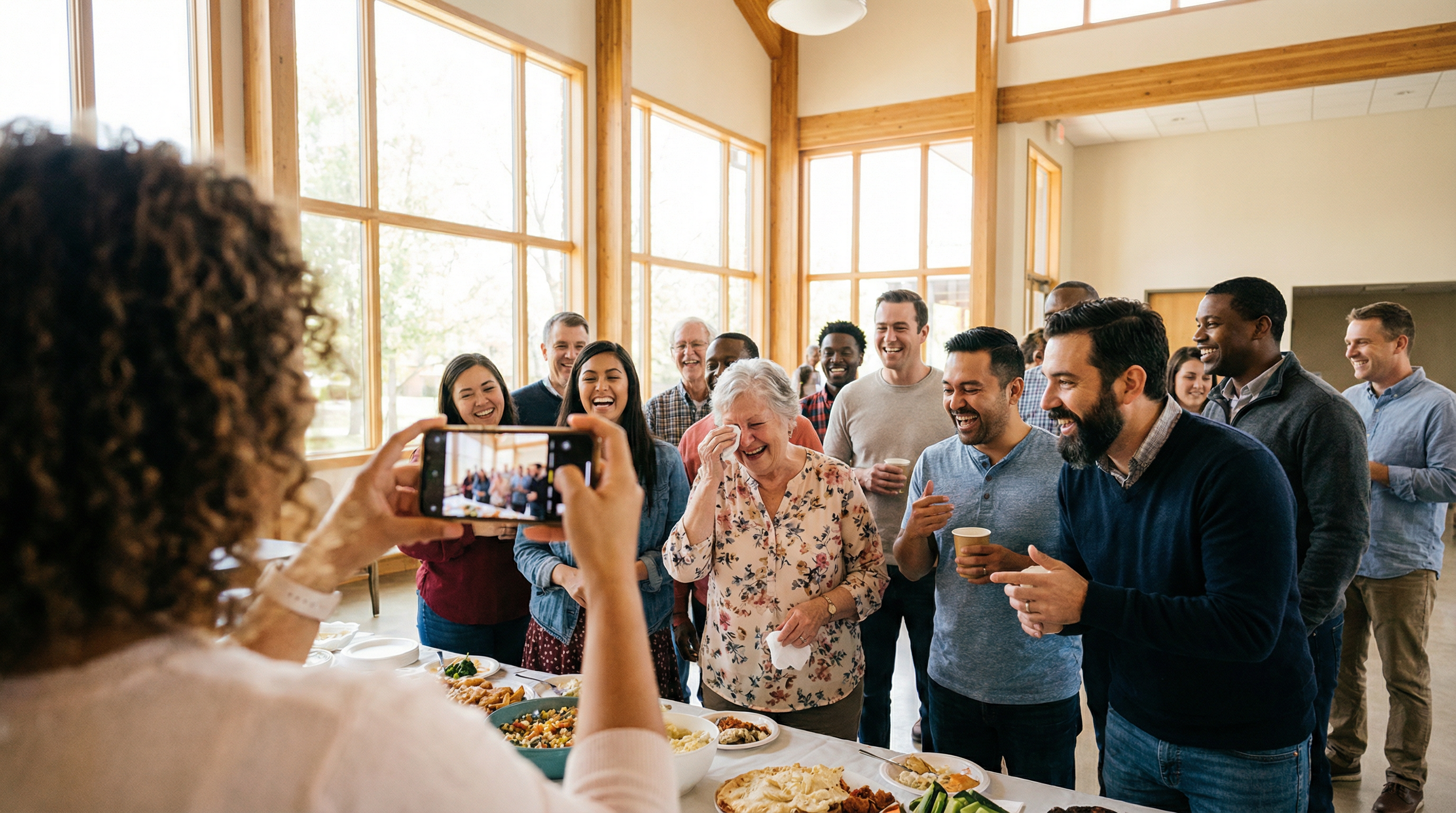
Community content shows the real life of your church through authentic moments, real people, and genuine connection. This pillar should comprise approximately 30-40% of your content.
Behind-the-scenes moments of your congregation serving together might show volunteers setting up for Sunday service, the worship team practicing, or members preparing meals for families in need. Faces and stories of people in your church could feature brief testimonies, member spotlights, or candid moments that capture authentic connection.
The key question for every piece of community content is: Does this post help someone imagine themselves here? If someone can't picture themselves in the scene you're showing, the content isn't serving its purpose.

Pillar 3: Invitation
Invitation content invites people into experiences, but not just "come to our service" announcements. This pillar focuses on community-oriented experiences and spiritual opportunities framed in accessible language. It should comprise approximately 20-30% of your content.
Community events that extend beyond just church programming might include service projects, neighborhood gatherings, or partnership with local organizations. Opportunities to serve or connect could feature volunteer needs, small group openings, or ways to get involved in ministry.
The key question for every piece of invitation content is: Does this post invite someone into something they might actually want to say yes to?
Platform Selection: Where Should Your Church Be in 2026?
Not all social media platforms serve churches equally well, and trying to maintain a presence on every platform is a recipe for burnout. Strategic platform selection focuses your limited time and energy on the channels where your specific community is most likely to engage.
Facebook remains the most important social media platform for churches in 2026. Your congregation is already there, the demographic skews toward the age ranges most likely to attend church regularly, and the platform's features (events, groups, live streaming) align well with church communication needs. Post 3-4 times per week with a mix of content pillars, and use video whenever possible.
Instagram excels at reaching younger demographics and first-time discoverers who may never have heard of your church. The platform's visual nature makes it ideal for community content—authentic photos and videos that show what your church actually looks like. Post 4-5 times per week on your main feed, with daily Stories to maintain visibility.
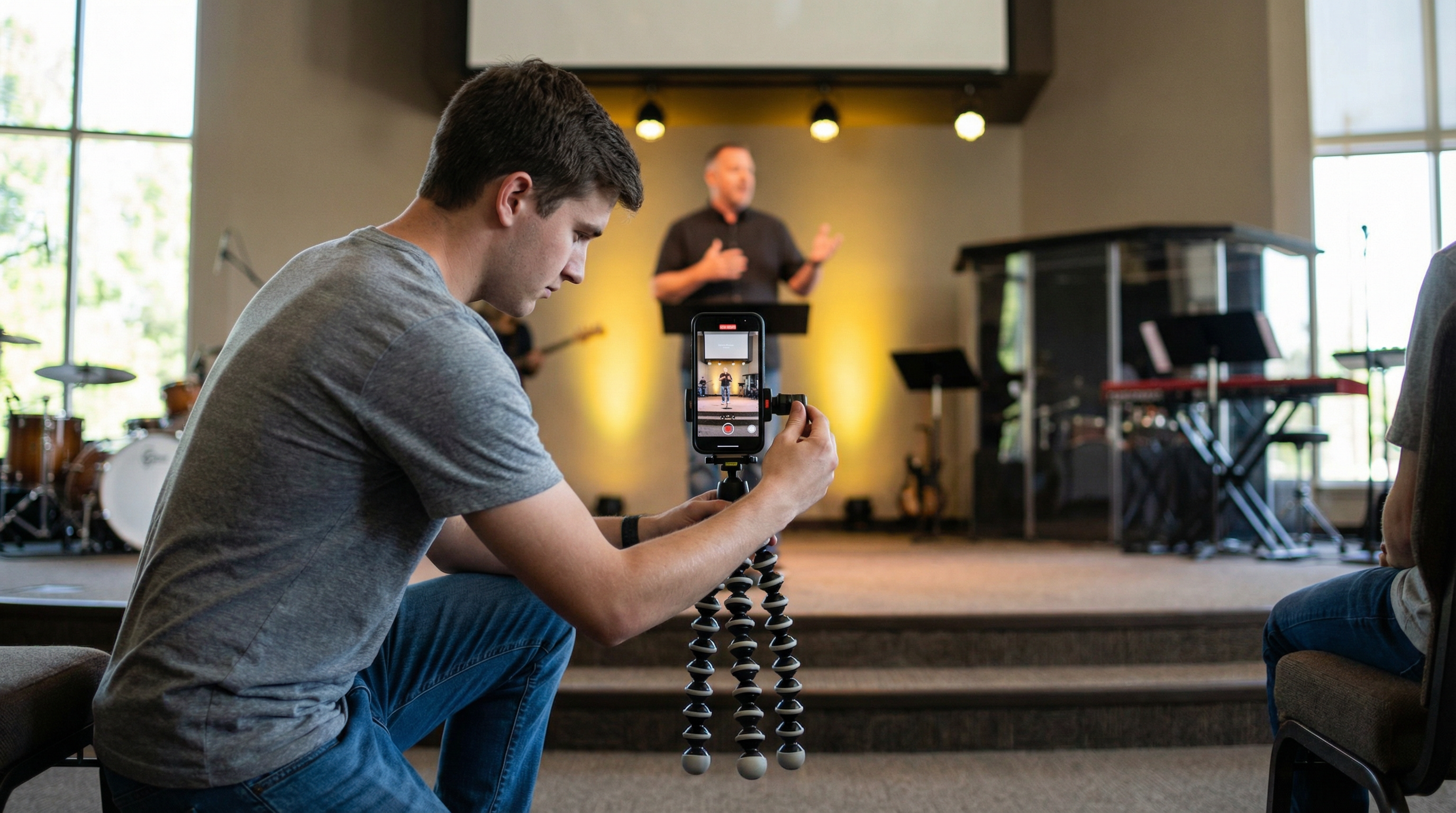
YouTube serves as your church's video library and long-form content platform. Upload full sermons consistently, optimizing titles and descriptions for search. Create playlists organized by topic or series to help people find related content.
For most churches, the optimal strategy focuses on Facebook and Instagram as primary platforms, with YouTube as a sermon archive. This two-platform approach allows you to reach both your existing congregation and first-time discoverers without overwhelming your team.
Creating Your Weekly Posting Schedule
Consistency matters more than frequency in church social media strategy. Posting seven times per week inconsistently will always underperform posting three times per week like clockwork.
For churches just beginning to build a strategic social media presence, start with three posts per week following this proven framework:
Monday: Sermon Recap - Share a 60-90 second video clip from Sunday's sermon highlighting a key point, powerful moment, or practical application. This extends Sunday's message into the new week and provides encouragement as people start their work week.
Wednesday: Midweek Encouragement - Post benefit content that encourages, inspires, or provides practical wisdom for the middle of the week. This might be a Scripture verse over a simple background, a quote from a recent sermon, or a brief reflection on finding strength in difficult seasons.
Friday: Weekend Invitation - Share community content or invitation content that builds anticipation for the weekend and invites people to upcoming gatherings. Focus on the benefit to the attendee, the community they'll experience, or the message they'll hear.
Repurposing Your Sermon: One Message, Multiple Pieces of Content
Your Sunday sermon represents hours of preparation, biblical study, and prayerful consideration. Strategic sermon repurposing transforms one message into multiple pieces of content that extend its impact across your social media platforms throughout the week.
Start by identifying 3-5 powerful moments from your sermon that work as standalone clips. Edit these moments into 60-90 second vertical video clips optimized for Instagram Reels, Facebook Reels, YouTube Shorts, and TikTok. Each clip should include captions and end with a clear call-to-action inviting people to watch the full message.
Pull 2-3 powerful quotes from the sermon and turn them into shareable graphics. Create a 5-7 slide carousel that breaks down the main points of your message, shares the key Scriptures, or offers practical application steps.
Engagement Strategies: From Broadcasting to Conversation
The churches seeing the greatest social media impact in 2026 have shifted from broadcasting content to fostering conversation. They recognize that engagement—comments, shares, saves, and meaningful interactions—matters far more than follower count or post reach.
One of the simplest ways to increase engagement is incorporating questions into your content strategy. Instead of making statements and hoping people respond, directly ask your audience to share their thoughts, experiences, or perspectives. End captions with "What's one thing you're grateful for today?" or "How have you seen God work in unexpected ways?"
Make it a non-negotiable practice to respond to every comment on your posts, at least during the first 24-48 hours after posting. This signals to your audience that you're actually listening and creates the kind of back-and-forth interaction that algorithms reward.
Measuring What Matters: Metrics Beyond Vanity Numbers
Most churches measure social media success by tracking follower count and post likes—what marketers call "vanity metrics." While these numbers feel good, they don't actually tell you whether your social media strategy is accomplishing its purpose.
Engagement rate measures the percentage of people who interact with your content relative to your total reach or follower count. Aim for a 4-6% engagement rate across your platforms. Saves and shares indicate that people found your content valuable enough to return to later or share with their own networks.
Profile visits and website clicks show whether your social media presence is driving people to learn more about your church. Reach beyond followers reveals whether your content is being discovered by new people or only seen by your existing audience.
Ultimately, the most important measure of social media success is real-world impact: Are people attending your church who first discovered you on social media? Are members of your congregation reporting that your social media content encouraged them during difficult weeks?
Common Mistakes to Avoid
Even with a solid strategy, churches often fall into predictable traps that undermine their social media effectiveness. The biggest mistake churches make is trying to create content that appeals to everyone simultaneously. Every post should have a specific person in mind—the single mom, the college student, the empty nester, the young professional.
Churches that use social media primarily for announcements train their audience to tune out. If 80% of your content is promotional, people will scroll past without engaging. Follow the 80/20 rule: 80% of your content should provide value (benefit and community content), while only 20% should be direct invitations or announcements.
Posting three times one week, once the next week, and not at all the following week trains your audience not to expect content from you. Commit to a sustainable posting schedule and stick to it. Three posts per week consistently will always outperform daily posts that you can't maintain.
Conclusion: From Overwhelmed to Strategic
Church social media doesn't have to feel overwhelming. When you shift from reactive posting to strategic planning, from inside-out thinking to outside-in content, and from broadcasting to conversation, social media becomes a powerful extension of your ministry rather than an exhausting obligation.
The strategy outlined in this guide—three content pillars, consistent posting schedules, strategic platform selection, and sermon repurposing—provides a sustainable framework that works for churches of any size. You don't need a massive budget, a full-time staff position, or professional production equipment. You just need a clear strategy and the commitment to execute it consistently.
Most importantly, remember why you're doing this: to steward the life-changing message of the gospel in the digital spaces where people are already spending their time. Your social media strategy isn't about building a bigger platform for your church—it's about extending the reach of truth, hope, and community to people who desperately need it.
For more resources on building an effective church website that complements your social media strategy, check out our comprehensive guide on church membership management software [blocked] to strengthen your community both online and offline.